Many buyers start by searching for the cheapest sky lift supplier online. They compare FOB prices in spreadsheets. But six months later, they face delayed shipments, missing spare parts, or certification issues that block local sales. The real problem is not finding a low quote—it is choosing a manufacturer who can support long-term cooperation, reduce after-sales risk, and lower total ownership cost.
The best sky lift manufacturer is not the one with the lowest price on the first inquiry. It is the supplier who delivers consistent quality, meets your market's certification requirements, provides spare parts on time, responds to technical questions quickly, and helps you sell and service equipment in your local market. (50 words)
In our communication with overseas buyers, we see a clear pattern. Buyers first ask for the lowest CIF price. Then they ask about delivery time. Later they realize they also need CE certificates, operation manuals in local language, spare parts inventory, warranty terms, and technical training. By that time, some have already signed with a low-price supplier who cannot provide these services. The result is delayed projects, unhappy end users, and lost profit.
Many dealers compare sky lift quotes by looking at the bottom line. They see one supplier offers a 10-meter boom lift at $8,500 FOB, another at $9,200. They assume the first one is better. But they do not check what is inside the price.
The "best" manufacturer is the one who balances price with verifiable quality, consistent delivery, complete documentation, responsive after-sales support, and the ability to help you grow your local business. Price alone does not show whether a supplier can meet these standards. (47 words)
We often receive inquiries that only ask for the lowest price. When we send a detailed quote with configuration breakdown, certification list, spare parts policy, and warranty terms, some buyers do not reply. They go with a cheaper offer. Three months later, they contact us again because the cheaper supplier cannot provide CE documents, or the hydraulic system leaks after 50 hours of operation, or spare parts take 60 days to ship from China.
Low price can be a risk signal. Some manufacturers reduce cost by using thinner steel, lower-grade hydraulic components, or simpler control systems. These choices do not show up in the product photo or basic specification sheet. But they show up in the field: shorter service life, more frequent breakdowns, higher maintenance cost, and safety concerns.
Here is a breakdown of where cost differences come from:
| Cost factor | Low-cost approach | Quality-focused approach | Impact on buyer |
|---|---|---|---|
| Steel frame | Thinner gauge, lower-grade steel | Q345B or equivalent, proper thickness | Frame durability, load capacity, safety margin |
| Hydraulic system | Generic pumps and cylinders, no brand traceability | Branded components, traceable batch numbers | Reliability, leakage risk, spare parts availability |
| Electrical control | Basic relay system, no diagnostics | PLC or CAN-bus system with fault codes | Ease of troubleshooting, downtime reduction |
| Safety devices | Minimum required sensors | Overload protection, tilt sensors, emergency stop, descent valve | User safety, insurance compliance, end-user confidence |
| Surface treatment | Simple paint, no pre-treatment | Shot blasting, zinc-rich primer, polyurethane topcoat | Corrosion resistance, appearance retention, resale value |
| Testing and QC | Visual inspection only | Load testing, function testing, third-party inspection available | Quality consistency, fewer field failures |
When you buy based on the lowest price, you may save $1,000 per unit upfront. But if the machine breaks down after 200 hours, and you need to ship spare parts from China, pay for local technician time, and face customer complaints, the total cost of ownership is much higher. The best manufacturer is the one who helps you avoid these hidden costs.
We suggest buyers use a checklist that goes beyond price. This checklist should cover production capacity, export experience, certification, spare parts support, after-sales response, and communication quality. Here are the key areas to check:
A capable sky lift manufacturer should demonstrate verifiable export experience, hold relevant certifications for your target market, maintain spare parts inventory, offer clear warranty terms, provide technical documentation in your language, and respond to inquiries with detailed answers—not just a price list. (44 words)
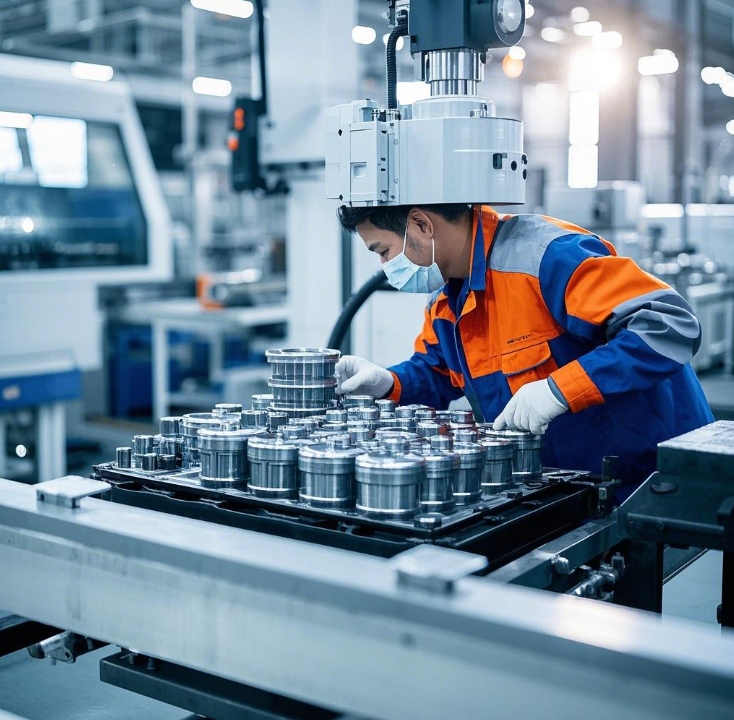
Ask the manufacturer how many units they produce per month. Ask if they manufacture key components in-house or source them from subcontractors. Check if they have a stable workforce or rely on temporary labor. Production capacity affects delivery stability. If a supplier only makes 20 units per month, and you need 50 units in a short time, they may subcontract to other workshops. Research shows that subcontracting manufacturing without strict oversight significantly increases quality variation risk.
We maintain a production capacity of 300–500 units per month across boom lifts and scissor lifts. We manufacture steel structures, hydraulic systems, and electrical assemblies in our own facility. This allows us to control quality at each stage and meet delivery deadlines consistently.
Check how long the manufacturer has been exporting. Ask which countries they ship to. Request customer references or photos of past shipments. A manufacturer with export experience understands container loading, export documentation, and destination port requirements. They know which certifications your market needs. They can provide commercial invoice, packing list, certificate of origin, and other documents correctly.
We have been exporting sky lifts for over 15 years. We ship to Europe, North America, Australia, Middle East, Southeast Asia, and Latin America. We understand CE requirements for Europe, ANSI standards for North America, and AS standards for Australia. We can provide pre-shipment inspection reports and third-party test certificates when buyers request them.
Ask which certifications the manufacturer holds. Check if they can provide test reports from accredited labs. Do not accept vague statements like "we can provide CE." Ask for the certificate number, issuing body, and test report. Verify the documents with the issuing authority if possible.
For Europe, you need CE marking with EN 280 compliance (for mobile elevating work platforms). For North America, you need ANSI/SIA A92 series standards. For Australia, you need AS 1418.10 and AS 2550.10. If the manufacturer cannot provide these documents, you may face customs clearance issues, insurance refusal, or legal liability if an accident occurs.
We hold CE certification issued by TÜV, with test reports for EN 280 and EN 12100. We also provide ANSI compliance documentation for North American buyers. All certificates and test reports are available for buyer review before order confirmation.
Ask the manufacturer if they stock spare parts. Ask how long it takes to ship common wear parts like hydraulic seals, filters, bearings, and control switches. Ask if they provide a spare parts list with part numbers and prices. Many manufacturers only focus on selling complete machines. They do not keep spare parts inventory. When a part fails in the field, the buyer waits 30–60 days for a replacement. Academic studies on spare parts management highlight that this causes exponential downtime and lost revenue.
We maintain a spare parts warehouse with over 500 SKUs covering hydraulic, electrical, and structural components. We ship spare parts within 3–5 business days after order confirmation. We provide a detailed spare parts manual with exploded diagrams, part numbers, and recommended maintenance intervals. This helps dealers and end users plan preventive maintenance and reduce emergency downtime.
Read the warranty terms carefully. Check what is covered and what is excluded. Ask who pays for shipping if a part needs replacement. Ask how the manufacturer handles warranty claims. Some suppliers offer "one-year warranty" but make it difficult to claim. They ask for excessive documentation, delay responses, or blame user error for every failure.
We offer a 12-month or 1,000-hour warranty (whichever comes first) covering manufacturing defects in materials and workmanship. We respond to warranty claims within 24 hours. We ship replacement parts at our cost if the failure is confirmed as a manufacturing defect. We also provide remote technical support via video call to help diagnose issues and guide local technicians.
Pay attention to how the manufacturer communicates. Do they answer your questions in detail, or do they just send a price list and say "please order"? Do they ask about your market, end-user requirements, and local regulations? Do they offer suggestions on model selection, configuration, and after-sales setup?
In our experience, many buyers appreciate suppliers who take time to understand their needs. We ask buyers which industries their end users work in (construction, maintenance, warehousing, events). We ask about local regulations and common site conditions (indoor/outdoor, temperature range, power supply). We recommend suitable models and configurations based on these factors. This reduces the risk of buyers ordering the wrong equipment.
Before you commit to a sky lift manufacturer, prepare a detailed inquiry. Do not just ask "what is your best price for a 10-meter boom lift?" Instead, provide context and ask specific questions. Here is a list of questions we recommend:
These questions help you compare manufacturers on equal terms. They also signal to the supplier that you are a serious buyer who values quality and long-term cooperation.
Finding the best sky lift manufacturer is not a one-time transaction. It is the start of a long-term partnership. You want a supplier who grows with your business, supports your sales efforts, and helps you solve problems quickly when they arise.
A strong manufacturer-dealer relationship is built on clear communication, consistent quality, reliable delivery, responsive after-sales support, and mutual respect. The best manufacturers treat their dealers as partners, not just order numbers. (37 words)
We recommend buyers start with a small trial order (1–3 units) before committing to large volumes. Use the trial order to test the manufacturer's communication, delivery time, product quality, documentation accuracy, and after-sales response. If the trial order goes smoothly, you can increase order size gradually.
During the trial phase, pay attention to:
Good manufacturers value feedback. If you find a problem, report it clearly and promptly. Provide photos, videos, and detailed descriptions. A professional manufacturer will investigate the issue, provide a solution, and take steps to prevent recurrence. This process builds trust on both sides.
We encourage our buyers to report any issues they encounter. We treat every complaint as an opportunity to improve. We also ask buyers to share positive feedback and success stories. This helps us understand what works well and what needs adjustment.
As your business grows, your needs will change. You may need larger order quantities, new models, custom configurations, or faster delivery. Discuss your growth plans with your manufacturer early. A good manufacturer will invest in capacity, inventory, and support systems to match your growth.
We work with several long-term dealers who started with 5–10 units per year and now order 100+ units annually. We adjust our production schedule, spare parts inventory, and technical support resources to meet their growing needs. This kind of partnership benefits both sides.
The best sky lift manufacturer is not defined by the lowest quote or a single brand ranking. It is the supplier who delivers consistent quality, meets your market's requirements, supports your sales and service efforts, and helps you reduce total cost and risk over time. Choose carefully, ask detailed questions, and build a long-term partnership based on trust and mutual growth.